STP ETP AERATION Twin Lobe Roots Air Blower Erection, Operation & Maintenance
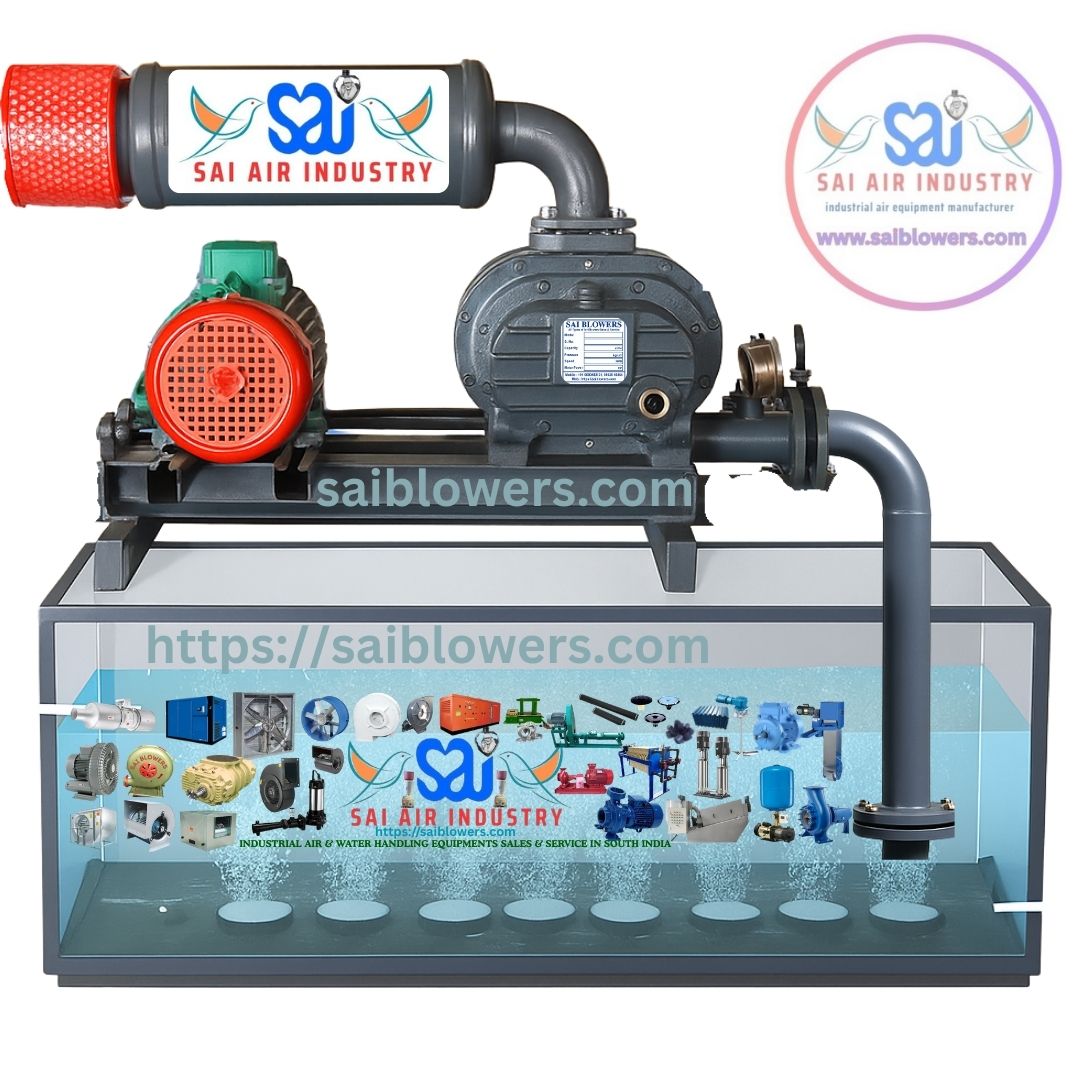
Twin Lobe Roots Air Blowers are widely used in STP, ETP, aquaculture, biogas, and pneumatic conveying applications because they deliver constant airflow and stable pressure. However, most blower failures occur due to improper erection, back pressure, continuous overheating, and poor maintenance.
To ensure long life and reliable performance:
Install the blower above tank level
Maintain correct pipe size and avoid excessive bends
Never reduce discharge pipe diameter
Install NRV and Pressure Relief Valve
Maintain proper gear oil level (SAE 90/140)
Do not run continuously without standby rotation
Keep operating pressure ideally between 0.1–0.3 kg/cm² for aeration
Avoid pressure above 0.4 kg/cm² to prevent overheating
Back pressure is the main reason for temperature rise, oil leakage, bearing damage, and frequent breakdowns. Using proper pipeline design, pressure monitoring, and temperature-based auto changeover systems can significantly increase blower life and reduce maintenance cost.
Twin Lobe Roots Air Blower Erection, Operation & Maintenance Guide
How to Avoid Back Pressure & Frequent Failures in STP / ETP Applications
Twin Lobe Roots Air Blowers are widely used in STP (Sewage Treatment Plants), ETP (Effluent Treatment Plants), Aquaculture, Biogas Plants, Cement Handling, and Pneumatic Conveying Systems.
However, many industries face frequent overheating, oil leakage, seal damage, and bearing failures — mainly due to improper erection and operation.
In this article, we explain:
Proper erection procedure
How to avoid back pressure
Common mistakes causing failures
Preventive maintenance best practices
What is a Twin Lobe Roots Air Blower?
A Twin Lobe Roots Blower is a positive displacement (PD) blower that delivers constant air volume regardless of pressure variations (within rated limits).
It is ideal for aeration applications where consistent oxygen supply is critical.
1️⃣ Proper Erection of Twin Lobe Roots Blowers
Correct installation is the foundation for long blower life.
1. Install Above Tank Level
Never install the blower below tank water level.
Installing below tank level causes:
Back pressure
Temperature rise
Oil seal leakage
Frequent breakdown
Short equipment life
Always install at top level or above tank platform.
2. Check Motor Rotation Direction
Before full operation:
Run motor briefly
Confirm rotation matches arrow mark on blower
Wrong rotation causes:
Immediate back pressure
Internal damage
Gear failure
3. Maintain Correct Pipe Size
Do NOT reduce pipe size after blower outlet.
✔ Pipe diameter must match or be larger than blower outlet
✔ Avoid excessive bends
✔ Avoid vertical discharge lines above 2 meters without proper design
When using two blowers into common header:
👉 Header pipe must be double the size of single blower outlet.
4. Install NRV & Pressure Relief Valve (PRV)
Always install:
Non Return Valve (NRV) – prevents reverse airflow
Pressure Relief Valve – set slightly below max rated pressure
This protects blower during shutdown and pressure spikes.
5. Proper Pulley & Belt Alignment
Use straight edge for alignment
Belt tension not too tight / not too loose
Avoid vibration
Improper alignment leads to bearing and shaft damage.
6. Gear Oil Lubrication
Use recommended gear oil (SAE 90 / SAE 140).
✔ Maintain oil level between MIN and MAX
✔ Never run without oil
✔ Use high-quality lubricant only
Running without oil for even one minute can damage gears and bearings.
Understanding Back Pressure – Main Reason for Failures
Back pressure is the number one reason for blower overheating and frequent spare replacement.
What Happens When Pressure Exceeds 0.4 kg/cm²?
When discharge pressure increases:
Blower casing temperature rises
Oil viscosity reduces
Oil seal starts leaking
Bearings and gears wear out
Shaft damage occurs
Even if blower rated for 0.7 kg/cm², continuous high pressure reduces lifespan drastically.
Ideal Pressure for STP & ETP Aeration
For biological aeration:
✔ 0.1 to 0.3 kg/cm² is ideal
❌ Above 0.4 kg/cm² causes heat and microorganism stress
High-pressure hot air can damage aerobic bacteria growth in aeration tanks.
3️⃣ Don’ts in Roots Blower Operation
❌ Do not reduce pipeline size
❌ Do not use excessive bends
❌ Do not run with delivery valve closed
❌ Do not operate above rated pressure
❌ Do not use wrong motor HP or RPM
❌ Do not run continuously without rest
❌ Do not install in poorly ventilated room
❌ Do not disassemble without expert tools
Most failures are not brand issues — they are erection and operation mistakes.
4️⃣ Avoid Continuous Running – Use Auto Changeover System
Running one blower continuously causes overheating.
Recommended Solution:
✔ Install Timer / PLC controller
✔ Temperature-based auto changeover
✔ Maintain standby blower
Example:
Blower A runs
When temperature reaches 50°C → Stop
Blower B starts
First blower cools down
This reduces thermal stress and increases life.
5️⃣ Maintenance Schedule for Long Life
🔹 Daily
Check Oil lubrication
Check noise
Check vibration
Check oil level
🔹 Weekly
Grease applying for pulley side 2 place ( tempresture base weeking 2 wise or 1 wise )
Clean air filter
Inspect belt tension
Check foundation bolts
🔹 Monthly
Log temperature
Check pressure gauge readings
Inspect lubrication - 200 hours once chenge gear oil
🔹 Quarterly
Pressure drop analysis
Minor internal inspection
🔹 Annually
Full overhaul if required
Replace oil seals & bearings if worn
Preventive maintenance is cheaper than breakdown repair.
Why Positive Displacement Blowers Are Used in STP & ETP?
Twin Lobe Roots Blowers are preferred because:
✔ Constant airflow
✔ Stable pressure
✔ Energy efficient
✔ Low maintenance
✔ Suitable for continuous operation
✔ Long service life
Additional Applications
Twin Lobe Roots Blowers are used in:
Aquaculture (Shrimp & Fish Hatcheries)
Cement & Fly Ash Conveying
Sugar Industry
Paper & Pulp Industry
Chemical Plants
Electroplating Tanks
Food Processing
Conclusion
Most Twin Lobe Roots Air Blower failures are caused by:
Improper erection
Back pressure
Wrong pipeline design
Continuous overheating
Poor lubrication
By following correct installation practices and pressure control, you can increase blower life by 2–3 times and reduce maintenance cost drastically.
Need Technical Support?
For blower selection, erection guidance, service, and annual maintenance support:
SAI AIR INDUSTRY
Industrial Air & Water Handling Equipment
Website: https://saiblowers.com
Email: [email protected]
Serving Chennai, Coimbatore, Pondicherry,Bengaluru, Hyderabad, Kochi & all South India.
Aeration Blower Aquaculture Air Blower Avoid Back Pressure Back Pressure Problems in Blowers Blower Oil Leakage Problem Blower Overheating Issues Blower Pipeline Design Blower Preventive Maintenance Blower Temperature Control Effluent Treatment Plant Blower ETP Air Blower Industrial Air Blower Industrial Blower Installation Industrial Blower Service NRV Installation Pneumatic Conveying Blower Positive Displacement Blower Pressure Relief Valve Roots Blower Erection Roots Blower Maintenance Roots Blower Troubleshooting Sewage Treatment Plant Blower Shrimp Hatchery Blower STP Blower Twin Lobe Roots Air Blower
STP ETP AERATION Twin Lobe Roots Air Blower ...
Twin Lobe Roots Air Blowers are widely used in STP, ETP, aquaculture, biogas, and pneumatic ...